Sales Funnels for Beginners: How to Build Your First Funnel With Systeme.io
Sales Funnels for Beginners: How to Build Your First Funnel With Systeme.io
If you are new to online business, you have probably heard people talk about sales funnels. But what exactly is a sales funnel, and how do you build one without getting overwhelmed?
The simple answer is this: a sales funnel is the step-by-step journey someone takes from discovering your offer to becoming a lead, customer, or buyer.
In this guide, I’ll show you what a sales funnel is, why it matters, the main stages of a funnel, common mistakes beginners make, and how to build your first sales funnel with systeme.io.
If you want an all-in-one platform to build funnels, collect leads, send emails, sell products, and automate your business, you can create your free systeme.io account here.
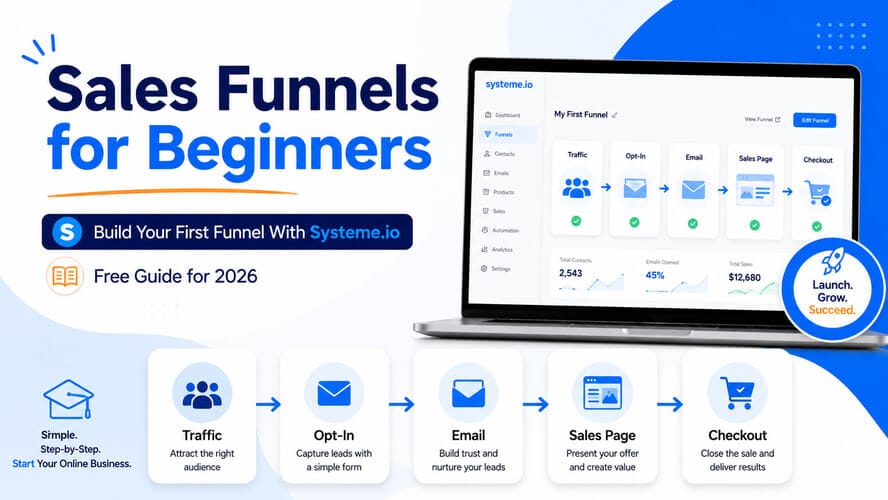
Quick answer: A sales funnel is a simple path that guides visitors from first discovering your business to taking action, such as joining your email list, buying your product, booking a call, or clicking an affiliate offer.
What Is a Sales Funnel?
A sales funnel is the process someone goes through before they become a lead or customer.
Think of it like a guided path. At the top of the funnel, people are just discovering you. In the middle, they are learning more and building trust. At the bottom, they are ready to take action.
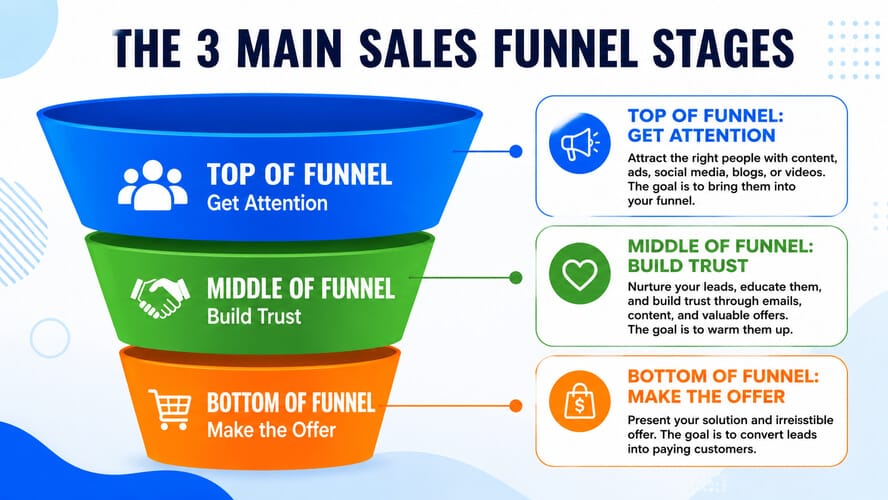
A simple sales funnel can look like this:
- Traffic source
- Opt-in page
- Thank-you page
- Email follow-up
- Sales page
- Checkout page
The goal is to move people from one step to the next without confusion.
If you are completely new to systeme.io, I recommend reading my full systeme.io review so you understand how the platform helps you build funnels, send emails, sell products, create courses, and automate your business.
Why Sales Funnels Matter for Online Business
A website gives people information, but a funnel gives people direction.
This is important because most visitors will not buy the first time they see your offer. They may need to understand the problem, trust you, see the value, and receive follow-up before they make a decision.
A sales funnel helps you do that in a structured way.
With a funnel, you can:
- Capture leads
- Grow your email list
- Promote affiliate products
- Sell digital products
- Sell online courses
- Book calls or consultations
- Automate follow-up emails
- Track results and improve conversions
Instead of sending people to a random page and hoping they take action, a funnel gives them one clear next step.
Want to Build Your First Funnel for Free?
Systeme.io lets you build sales funnels, collect leads, send emails, sell products, and automate your online business from one simple platform.
Start Free With Systeme.ioThe 3 Main Sales Funnel Stages
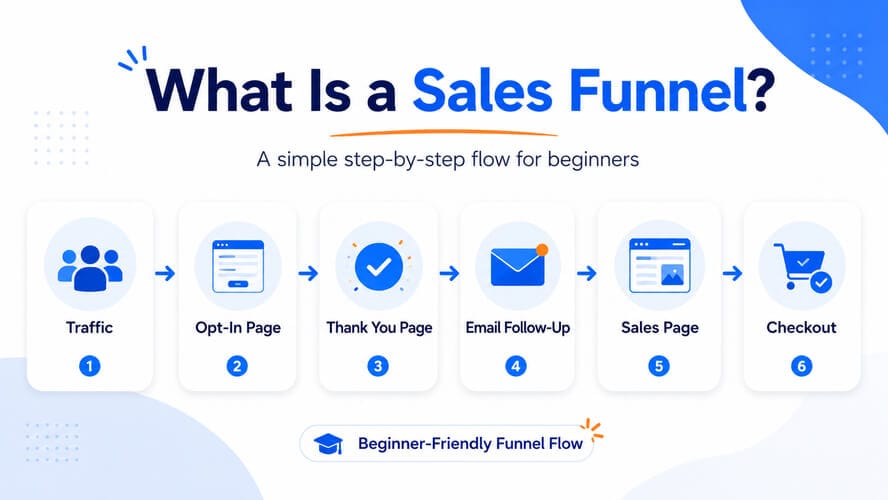
Every sales funnel can be understood in three main stages: top of funnel, middle of funnel, and bottom of funnel.
These stages help you understand where your visitor is in the buying journey.
Top of Funnel: Get Attention
The top of the funnel is where people first discover you. This can happen through blog posts, YouTube videos, social media, ads, SEO, Pinterest, email, or affiliate content.
At this stage, the goal is not always to sell immediately. The goal is to get attention and bring the right people into your world.
Middle of Funnel: Build Trust
The middle of the funnel is where you build trust. This is where your visitor becomes a lead, reads your content, watches your training, downloads your free guide, or receives your email sequence.
At this stage, you educate, nurture, and show people why your solution can help them.
Bottom of Funnel: Make the Offer
The bottom of the funnel is where you present your offer. This could be a digital product, online course, coaching package, affiliate product, service, or subscription.
At this stage, the goal is to convert leads into customers.
Simple Sales Funnel Example for Beginners
Here is a simple example of a beginner-friendly sales funnel:
- You publish a blog post or social media post.
- The visitor clicks your link.
- They land on an opt-in page.
- They enter their email to get a free guide or training.
- They are redirected to a thank-you page.
- They receive follow-up emails.
- You send them to a sales page.
- They buy through your checkout page.
This is a basic funnel, but it can be powerful because it gives your visitor a clear journey.
If you are promoting affiliate products, you can use a similar structure. Instead of sending people straight to an affiliate offer, you can collect leads first and follow up with helpful emails.
I explain this in more detail in my guide on how to build an affiliate funnel with systeme.io.
How to Build a Sales Funnel With Systeme.io
Systeme.io is beginner-friendly because it gives you the main tools you need in one place. You can build funnels, create landing pages, send emails, sell products, host courses, create automations, and track results.
If you do not have an account yet, you can create your free systeme.io account here.
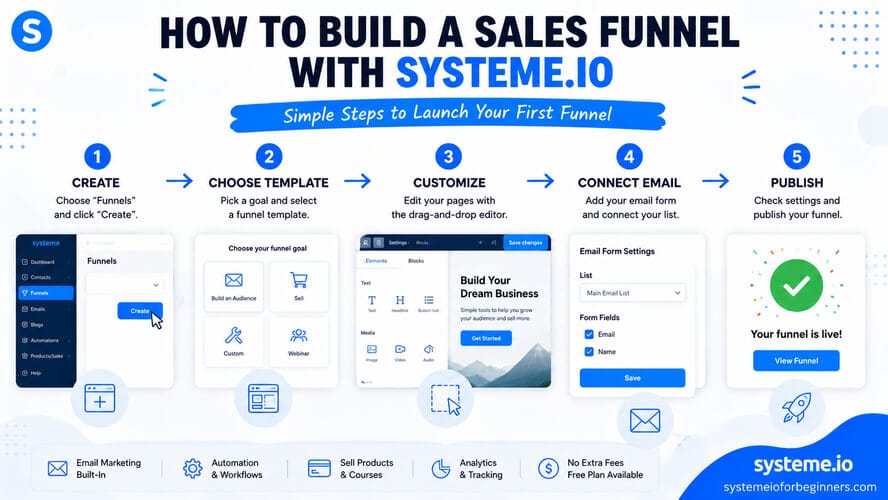
Step 1: Create Your Systeme.io Account
First, create your free account. The free plan is a good way to start learning and building without paying upfront.
You can also read my systeme.io Free Plan review if you want to understand what is included before you start.
Step 2: Go to Funnels
Inside your dashboard, go to the funnels section. This is where you can create and manage your funnel steps.
Step 3: Create a New Funnel
Click to create a new funnel and choose your goal. For example, you may want to build an audience, sell a product, run a webinar, or create a custom funnel.
Step 4: Choose a Template
Systeme.io gives you funnel templates to help you start faster. Choose a template that matches your goal, then customize it with your own text, colors, images, and offer.
Step 5: Customize Your Funnel Pages
Use the drag-and-drop editor to customize your pages. Keep your pages simple and clear. Your visitor should understand what the page is about and what they should do next.
Step 6: Connect Your Email Form
If your funnel collects leads, connect your opt-in form to your email list or campaign. This allows you to follow up automatically after someone signs up.
Step 7: Add Your Offer
Your offer could be your own product, an online course, a service, or an affiliate offer. Make sure the offer matches what your audience wants.
Step 8: Test Everything
Before sending traffic, test every step. Check your buttons, forms, emails, checkout page, thank-you page, and mobile version.
Step 9: Publish and Improve
Once your funnel is live, track the results and improve over time. Your first funnel does not need to be perfect. It just needs to be clear, working, and easy to follow.
Best Types of Sales Funnels You Can Build With Systeme.io
Once you understand the basics, you can build different types of funnels depending on your business model.
Lead Magnet Funnel
A lead magnet funnel gives away something valuable for free in exchange for an email address. This could be a checklist, ebook, free course, template, or video training.
Affiliate Marketing Funnel
An affiliate funnel helps you collect leads and then recommend affiliate products through follow-up emails or bridge pages.
If you want to promote systeme.io as an affiliate, my systeme.io affiliate program guide explains how the affiliate program works.
Course Sales Funnel
A course funnel helps you promote and sell an online course. You can use a sales page, checkout page, thank-you page, and automated course access.
Digital Product Funnel
A digital product funnel helps you sell ebooks, templates, PLR products, downloads, workshops, or digital bundles.
Tripwire Funnel
A tripwire funnel offers a low-cost product after someone joins your list. This can help turn new leads into customers faster.
Webinar Funnel
A webinar funnel invites people to register for a training or presentation, then introduces an offer during or after the webinar.
Common Sales Funnel Mistakes Beginners Make
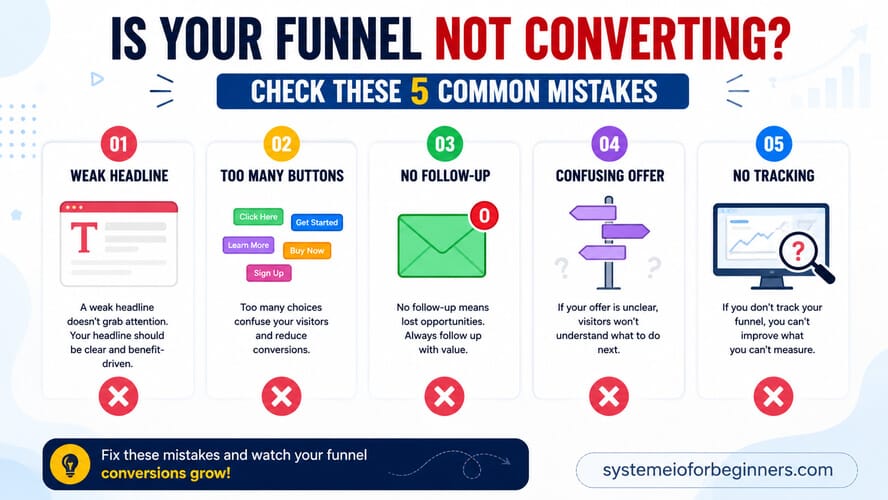
If your funnel is not converting, it does not always mean your offer is bad. Sometimes the funnel simply has too much friction or the message is unclear.
Here are some common mistakes to avoid.
Mistake 1: Weak Headline
Your headline should quickly explain the benefit or promise. If people do not understand the page within a few seconds, they may leave.
Mistake 2: Too Many Buttons
A funnel page should usually have one main goal. Too many buttons can confuse visitors and reduce conversions.
Mistake 3: No Follow-Up
Many people will not buy immediately. If you do not have email follow-up, you may lose potential customers.
Mistake 4: Confusing Offer
Your offer should be easy to understand. People should know what they get, why it matters, and what to do next.
Mistake 5: No Tracking
If you are not tracking your funnel, you will not know what needs improvement.
How to Improve Your Sales Funnel Conversions
A funnel does not have to be perfect when you first launch it. The important thing is to launch, test, and improve.
Here are simple ways to improve your funnel:
- Use one clear call to action
- Make the headline benefit-driven
- Keep the page simple
- Remove unnecessary distractions
- Use clear button text
- Add proof or testimonials when possible
- Make your offer easy to understand
- Test your opt-in form
- Check the mobile version
- Use email follow-up
If you want to learn more about using systeme.io properly, you may also like my systeme.io certification review, where I explain the general certification and how it helps beginners understand the platform.
Why Systeme.io Is Good for Building Sales Funnels
Systeme.io is useful for beginners because it combines several tools in one platform.
Instead of paying for separate software for funnels, email marketing, automation, online courses, and affiliate management, systeme.io gives you many of those tools together.
With systeme.io, you can build:
- Sales funnels
- Landing pages
- Email campaigns
- Automations
- Online courses
- Digital product offers
- Affiliate programs
- Blogs and websites
If you want to understand the cost of systeme.io, my systeme.io pricing explained guide breaks down the plans. You can also compare the Free Plan, Startup Plan, and Unlimited Plan if you want a closer look.
Want to Learn Funnel Building Step by Step?
If you want more help learning how funnels work, systeme.io also offers a free Funnel Builder Course.
This course includes beginner-friendly training that shows you how to build funnels, understand funnel pages, automate parts of your funnel, and improve performance.
You can start it here: Get your funnel builder certification as a bonus.
You can also check out the general systeme.io certification here: Get your systeme.io expert certification.
And if you want extra official training, you can also visit: Mastering systeme.io.
Helpful Systeme.io Resources for Beginners
If you are new to systeme.io, I recommend starting with my Start Here guide. It gives you a simple beginner-friendly path so you know what to learn first.
Before building your first funnel, my systeme.io review will help you understand the platform and what it can do for your online business.
If you are planning to promote products as an affiliate, my guide on how to build an affiliate funnel with systeme.io will help you understand how to collect leads before sending people to your affiliate offer.
If you want to create your own affiliate program for your products, read my guide on how to create an affiliate program with systeme.io.
If you want to promote systeme.io itself, you can register here: Become a systeme.io affiliate.
Frequently Asked Questions
What is a sales funnel?
A sales funnel is the step-by-step journey someone takes from first discovering your business to becoming a lead, customer, or buyer.
Do beginners need a sales funnel?
Yes. A simple sales funnel can help beginners collect leads, promote offers, sell products, and follow up with visitors automatically.
Can I build a sales funnel with systeme.io for free?
Yes, systeme.io offers a free plan that lets beginners start building funnels without paying upfront. You can create your free account here.
What pages should a simple funnel include?
A simple funnel may include an opt-in page, thank-you page, email follow-up, sales page, and checkout page.
Is systeme.io good for affiliate funnels?
Yes. You can use systeme.io to build affiliate funnels, collect leads, send email follow-ups, and promote affiliate products.
What is the biggest sales funnel mistake beginners make?
One of the biggest mistakes is creating a funnel without one clear goal. Each page should have one main purpose and one clear next step.
Final Thoughts
Sales funnels can feel confusing at first, but once you understand the structure, they become much easier to build.
Start simple. Build one funnel. Test it. Improve it. Systeme.io gives you the tools to do all of this from one platform.
Create Your Free Systeme.io Account
About me

I’m Daniel Popa. I help beginners learn how to use Systeme.io to build funnels, grow an email list, and start affiliate marketing with simple, low-cost tools.
©SystemeioForBeginners
Important Note
*systemeioforbeginners.com is an independent educational website and is not owned, operated, endorsed, or sponsored by Systeme.io or ITACWT Limited.
Some links on this website may be affiliate links. If you sign up through one of my links and later choose a paid plan, I may earn a commission at no extra cost to you.